
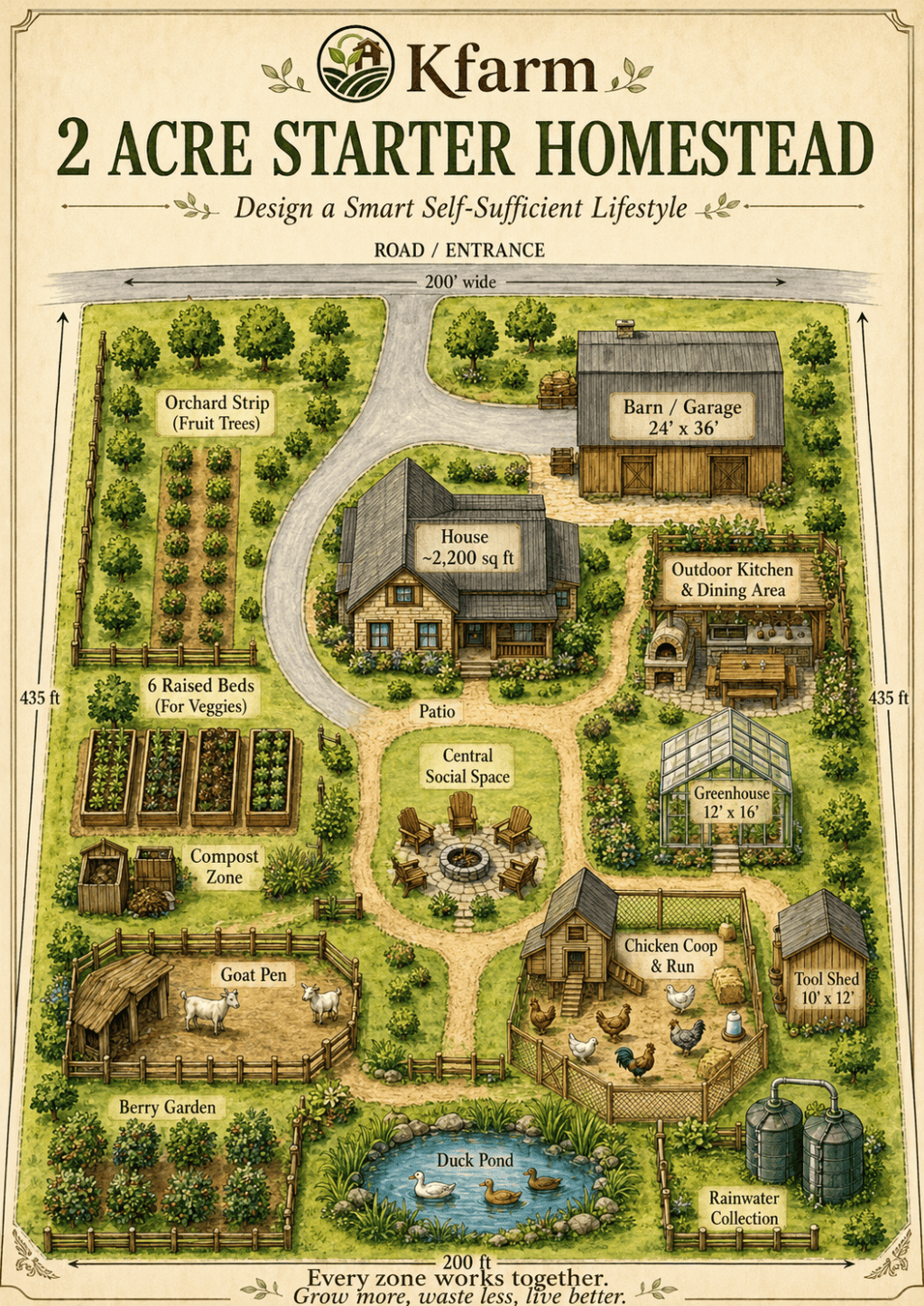
KFARM SMALL-ACREAGE PLANNING
Half an acre can support a surprising amount of productive space when every zone has a clear job. The goal is not to fit everything onto the property; it is to make the highest-use areas easy to reach and preserve flexibility.
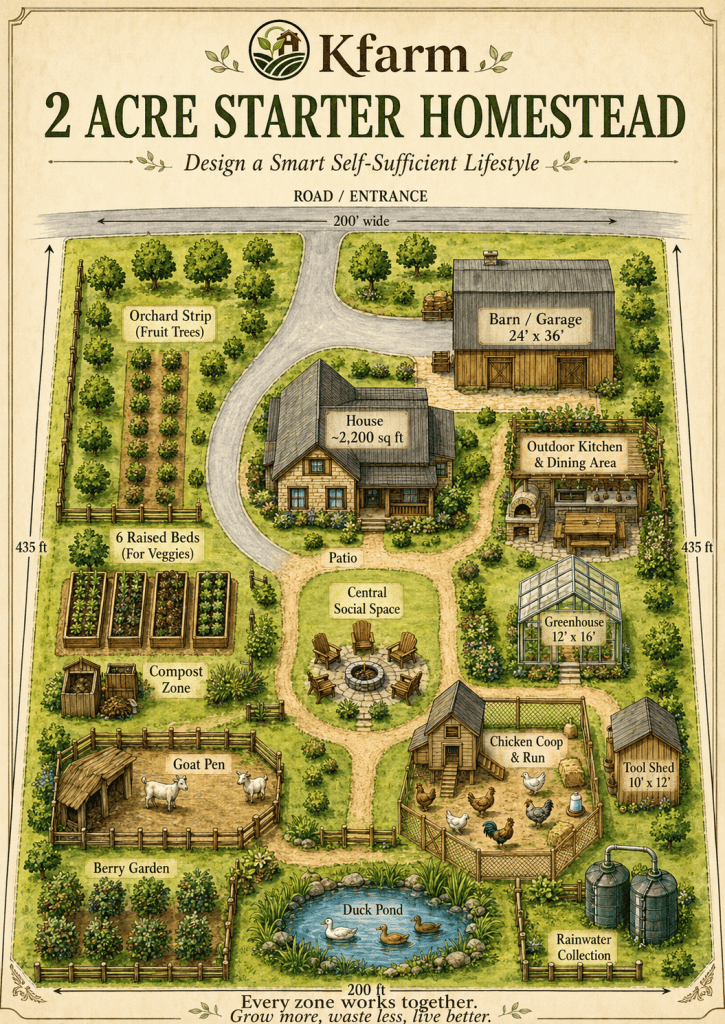
Start With the Property, Not the Wish List
On a compact property, the house, driveway, utilities, setbacks, septic or sewer service, drainage and existing shade can consume a large share of usable land. Map those conditions first.
Keep Daily-Use Zones Close
Vegetables, herbs, compost, tools and small poultry systems create frequent trips. Place the most intensively managed areas where they can be reached without crossing the entire property.
Prioritize Intensive Growing
Raised beds, trellises, succession planting and vertical crops can produce more value from limited square footage than widely spaced systems. Keep paths practical for maintenance and reserve the best sun for crops that need it most.
Design Water Before Expansion
Observe where rain arrives, where roof water leaves the house and where surface water collects. A compact property magnifies drainage mistakes because structures, gardens and paths sit close together.
Read: Trace These Five Water Paths →
Add Animals Only After Infrastructure
Small poultry can fit a compact homestead, but housing, predator protection, feed storage, water, manure management and neighbor impacts need space too. Infrastructure belongs in the plan before animals arrive.
Leave One Flexible Zone
Do not permanently assign every square foot on day one. A flexible area gives you room to correct an early assumption, enlarge a garden, improve access or respond to what the land teaches you.

FREE KFARM RESOURCE
Planning Land of Your Own?
Use the free KFarm Homestead Land Buying Checklist to review essential questions before adapting any illustrated layout to a real property.

