
KFARM EDUCATION BOOK / GROW
Place Growing Systems Where They Can Actually Work
Use light, water, access and maintenance reality to place beds, greenhouse, orchard and season-extension systems.

FIELD GUIDE
Place the Garden as Infrastructure
A productive garden needs more than sun. Consider water, harvest routes, fencing and how often the space will be visited.
FIELD CHECK
Check sun · water route · harvest access · pest pressure · expansion space.
FIELD GUIDE
Choose the System for the Problem
Raised beds, low tunnels, cold frames and fencing solve different constraints.

Choose Your Garden Beds
Read details
Select the system for the growing area.

Extend Your Growing Season
Read details
Match protection to a specific need.

Keep Growing Areas Accessible
Read details
Retain water, harvest and maintenance routes.
FIELD GUIDE
Extend Only What You Can Maintain
Add systems where the extra work produces a clear benefit.
GROWING PRINCIPLE
The best growing system fits the property’s light, water and realistic maintenance capacity.
Growing systems comparison
Compare cedar, metal, elevated and modular beds before selecting a system.
FIELD GUIDE
Your working sheet
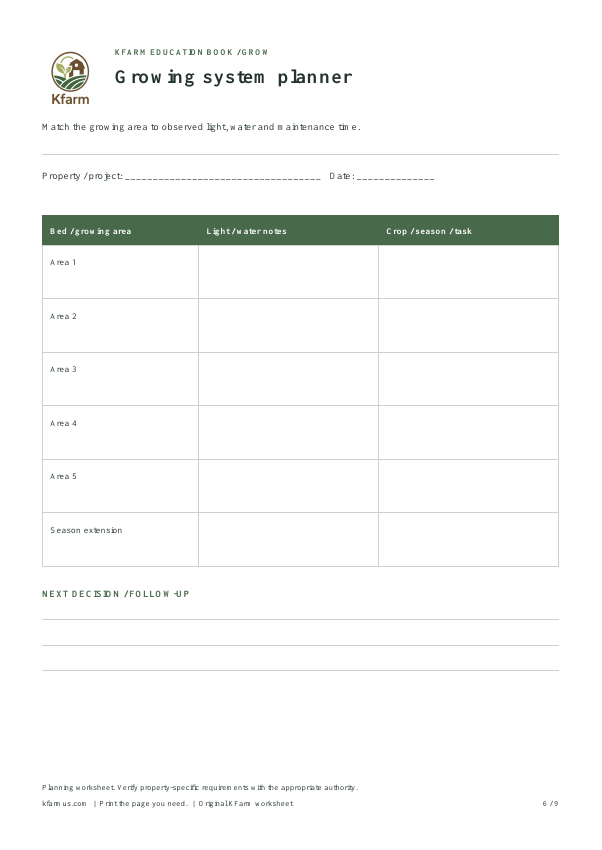
Growing system planner
A real working sheet for your property. Record evidence, assign the next action and set a follow-up date.
Free nine-page PDF. Print page 6 for this chapter.
Download free workbookSelect the preview to view the full-size sheet.
Tools for This Plan
Drip irrigation kit. Lay out the water route before filling or expanding the beds. Match tubing, emitters and required pressure-control components to the planting and water supply.
Compost thermometer. Use a long-probe thermometer to track temperature changes in a managed compost pile. Record readings with your turning and material notes instead of judging progress from the surface alone.