
KFARM EDUCATION BOOK / PREPARE
Prepare the Site Without Destroying the Plan
Clear, mark and open access selectively so site preparation supports the final layout instead of forcing it.

FIELD GUIDE
Mark Before You Clear
Use the working map to identify what stays, what needs access and what should remain untouched until later phases.
FIELD CHECK
Mark boundaries and constraints · flag access · protect drainage · identify staging areas · photograph before work.
FIELD GUIDE
Prepare Access First
Construction, deliveries and maintenance depend on practical movement and turning space.

Mark Your Work Area
Read details
Define the current work area.
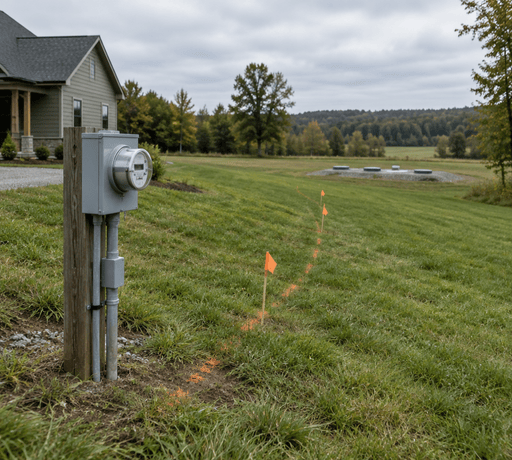
Protect Your Fixed Systems
Read details
Keep fixed systems and retained vegetation clear.

Stage Materials and Access
Read details
Arrange access, materials and waste handling.
FIELD GUIDE
Clear in Phases
Remove what is necessary for the current phase instead of treating every tree or open area as an obstacle.
COMMON MISTAKE
Clearing too much too early can remove shade, screening, wind protection and flexibility.
Preparation sequence
Review the phased build-out example before scheduling site work.
FIELD GUIDE
Your working sheet
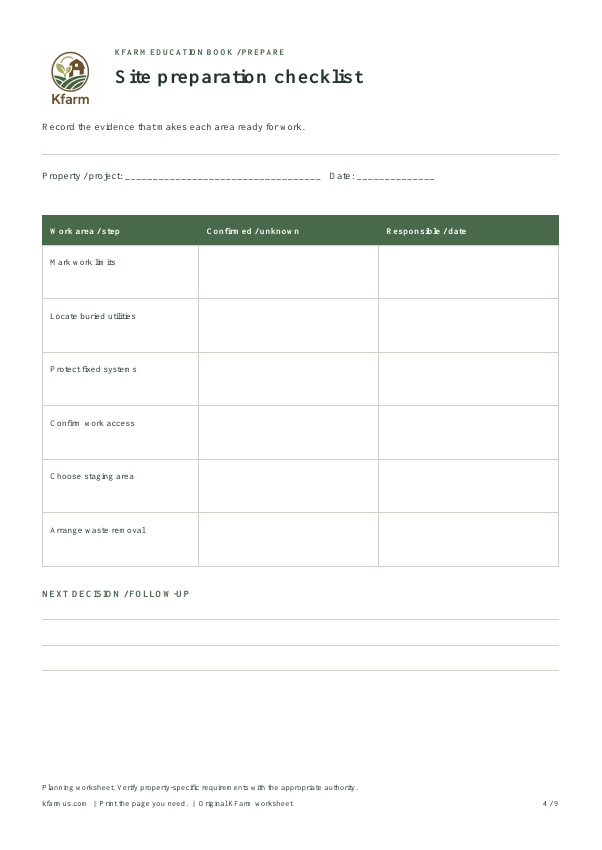
Site preparation checklist
A real working sheet for your property. Record evidence, assign the next action and set a follow-up date.
Free nine-page PDF. Print page 4 for this chapter.
Download free workbookSelect the preview to view the full-size sheet.
Tools for This Plan
Removable layout markers. Mark proposed beds and paths so you can walk the layout before building. Use markers only where insertion is safe, and keep your planning marks distinct from official utility markings.
Bypass pruners. Choose pruners for the stems you expect to cut and your hand size. Keep the blades clean, and use plant-specific pruning guidance before removing live growth.