
POPULAR ON KFARM · SMALL-ACREAGE PLANNING
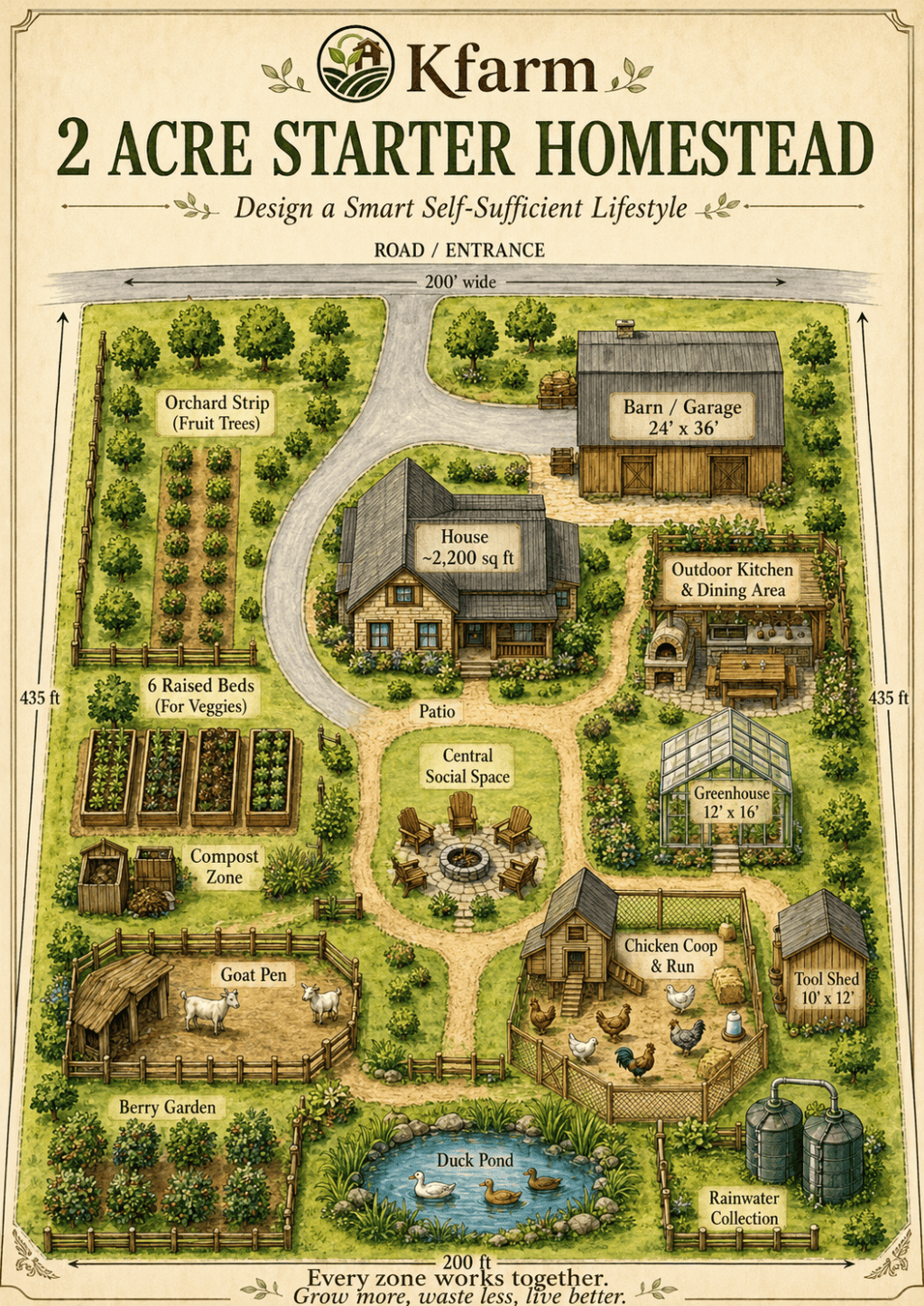
One acre can do a lot when every zone has a purpose. The house, growing space, orchard, water and daily-use areas should work together rather than compete for room.
6. Trace Water From Roof to Outlet
Follow roof runoff and downspouts to the foundation edge, surface flow and lowest safe outlet. Water should influence paths, beds and structures before they become permanent.
Explore the KFarm Water Paths Guide →
7. Design Access for Real Work
Ask how mulch, feed, compost, harvested produce, tools and materials move through the property.
Read: Delivery, Harvest & Daily Workflow →
8. Build in an Order That Preserves Options
Start with constraints, access and water. Establish the systems you will use most, then add permanent structures once the first season confirms how the property behaves.

FREE KFARM RESOURCE
Planning Land of Your Own?
Use the free KFarm Homestead Land Buying Checklist to review essential questions before adapting any illustrated layout to a real property.


Leave a comment