
KFARM ACREAGE PLANNING
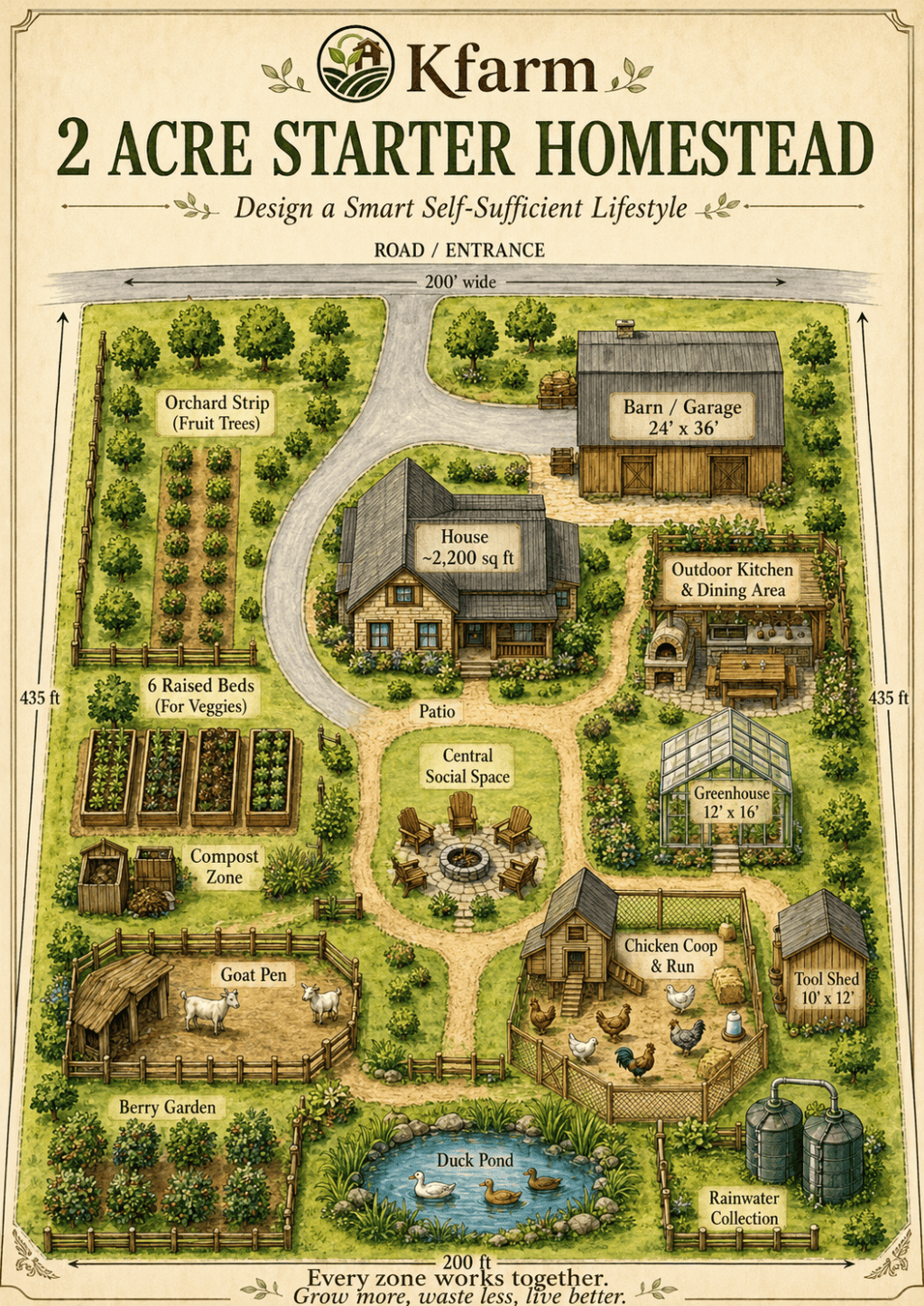
Three acres gives a homestead more breathing room, but extra space can also create longer routes and scattered systems. Keep the home, intensive growing zones, greenhouse, water and everyday work connected so the property becomes easier—not harder—to manage.
Build a Compact Daily Core
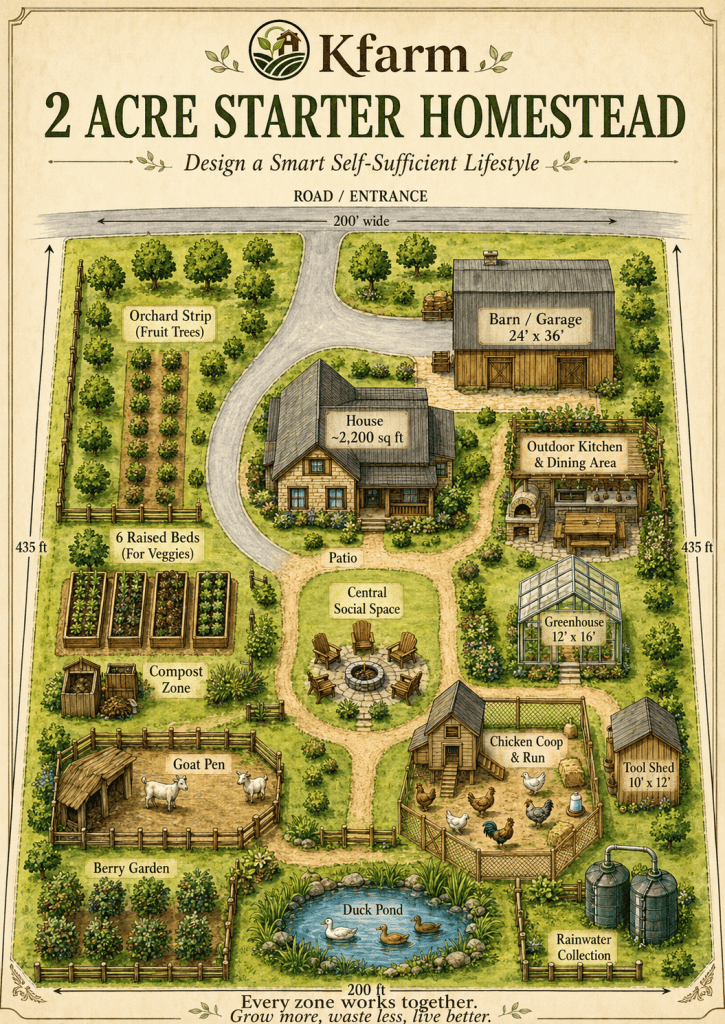
More acreage does not mean every system should spread outward. Keep frequently visited growing, storage and work areas connected to the house. Use distance intentionally for lower-frequency zones.
Separate Intensive Growing From Long-Term Production
Vegetable beds and greenhouse production benefit from convenient access to water, tools and harvest routes. Orchard, berries and other perennial systems can occupy a broader outer zone.
Reserve Service Access
Three acres can require more material movement: compost, mulch, soil, feed, equipment and harvested produce. Preserve routes that let materials reach their destination without crossing patios or narrow garden paths.
Read the KFarm Workflow Guide →
Use Water to Define the Layout
Map roof runoff, low areas, drainage paths and water-delivery needs before expanding the garden or adding structures. Longer distances make poorly planned water systems more expensive in infrastructure and labor.
Protect Expansion Space
Leave room for systems that may arrive later: additional growing, a greenhouse, animals, storage or improved access. Avoid filling open land simply because it is available.
Build in Phases
Start with the systems that establish access, water and productive capacity. Observe the property through weather and seasons before making every permanent placement decision.
FREE KFARM RESOURCE
Planning Land of Your Own?
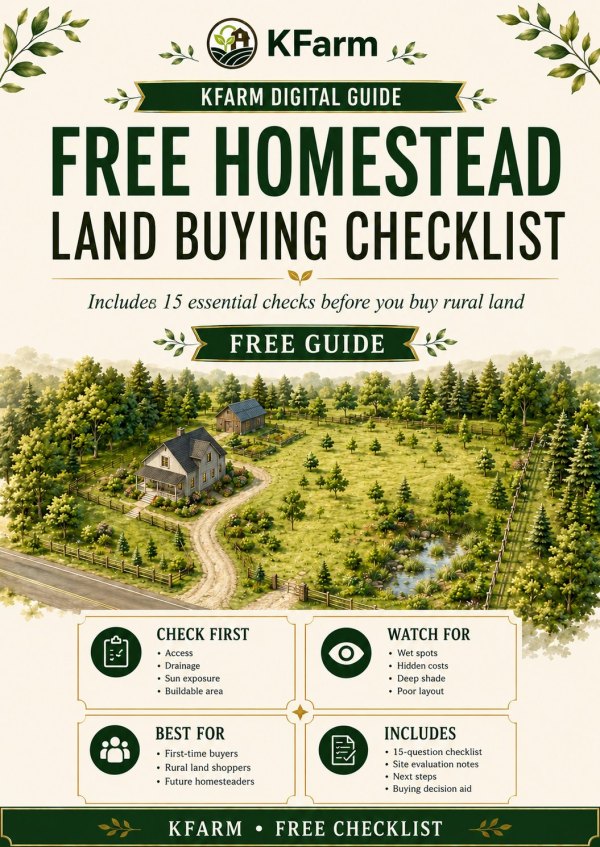
Use the free KFarm Homestead Land Buying Checklist to review essential questions before adapting any illustrated layout to a real property.


Leave a comment